
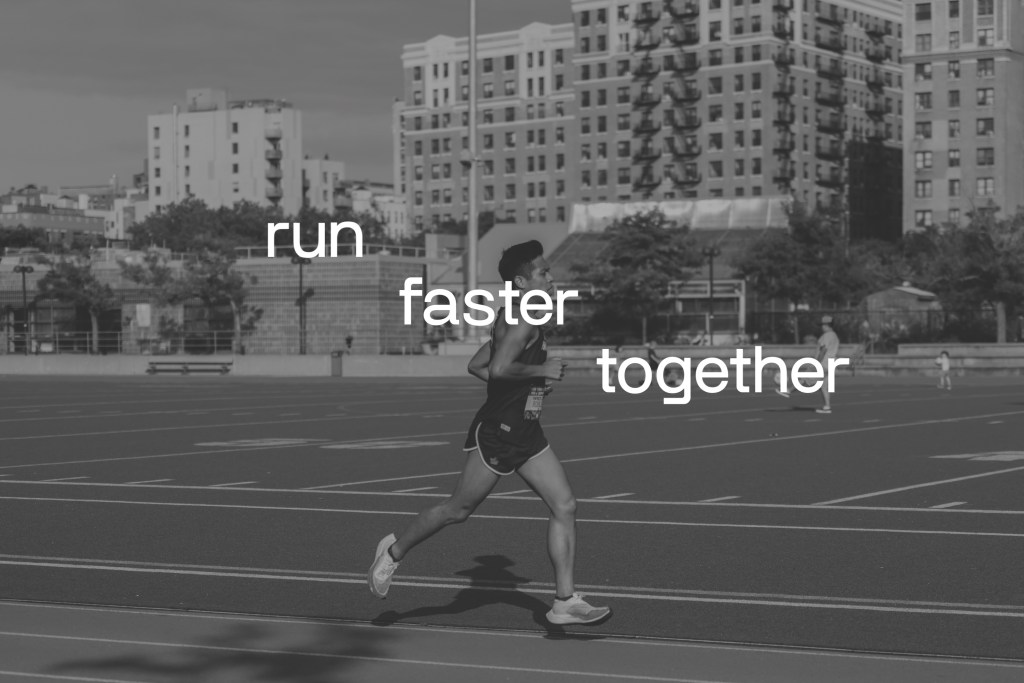
With the marathon this week, New York City runners will be buzzing with anticipation. Local clubs apparently engage in what feels like a ceremonial ‘Last 10’ run. “All the clubs do it,” I’ve been told and so did mine. Having no plans to run the marathon, I had little hesitation taking my foot of the brake and pushing to stay with the faster group. All club runs string out to some extent, but on a day that seemed primed to celebrate community, and as one of the newer additions, I was ashamed to realize we had left behind some of our mainstay runners. Running with the new crowd without appreciating those who have laid the foundation—this resurfaced a thought I’ve been pondering: was running’s current popularity at odds with its traditions?
Being a relatively new club runner, I often wonder if I am the result of this so-called ‘third boom’ of running (the second boom apparently having occurred in the 1970s). Participation in running events hosted by the New York Road Runners has increased over the last two years and its marquee event—the little known New York City Marathon—has similarly grown in popularity over the last three years: 165,000 in 2024, 200,000 in 2025, and 240,000 in 2026. Strava reported that there are 3.5 times more running clubs between 2024 and 2025. But if those numbers aren’t enough to convince you, I invite you to count how many runners are swarming the sidewalks, roads, and trails.
This growth in popularity should be welcome news. After all, there are well-known benefits to running, namely better cardiovascular health and more positive mood. There are other, more understated benefits: go to enough running events, and you’ll get a sense of camaraderie as you start to see the same faces in the corrals. If you manage to avoid running the same routes, you can discover hidden sides to your otherwise familiar neighborhood. And if you manage to string enough of them together, getting a new personal best is a high like no other.
The groundswell of runners has also underscored opportunities that have been neglected by mainstream running. Unsanctioned racing has stepped in to address the increased demand for racing, establishing a counter culture for running in the process. “Unsanctioned racing is a rebellion,” said Darcy Bud, founder of Take The Bridge, which organizes races across New York City’s famous bridges. “It’s a moment for us to create a race, an event, that can directly connect us to connect with our community and speak to what we want.” At the same time, newer running brands have tapped into this bottom-up movement with Tracksmith hosting the Varsity Club and Bandit creating the Unsponsored Project to highlight the flaws in professional track and field. As if spurred on by this, even the global conglomerate Nike sees enough potential in these same grassroots movement to divert resources for what are hyper-local events, such as by partnering with running organizations such as Orchard Street Runners in New York City.
At the same time, running’s surge of popularity has led to some resistance as it is seen as inviting exploitation and inauthenticity. So-called ‘runfluencers’ are attracting most of the flak: Despite being highly visible, running-focused influencers have been criticized for hawking a misleading aesthetic and lifestyle and for betraying the spirit of the sport either by hitching a ride on a bike partway through a marathon or endangering other racers by arranging a film crew. More pernicious yet are problems like counterfeit bibs and scam races as frauds supposedly seek to take advantage of naïve and eager runners.
This contrast is reminiscent, of course, of the dynamic between the grouchy old guard and a flippant young blood. Are runfluencers nuisance or are they just highly visible scapegoats? Are there too many runners or are there just not enough races? Are themed club runs missing the point or could they motivate someone who may otherwise sit on the couch? Separating what are valid concerns out of what are reflexive gripes is the inevitable solution to this exercise.
So I think back to our call for authenticity and ask whether that authenticity can evolve. After all, don’t run clubs invite new members who then bring in new points of view and ask for new routes or paces? Even running, humanity’s oldest sport, has the capacity to change and has changed even if our earliest ancestors never envisioned the Tipster NYC ‘Bakery Run’. Running, I believe, is what we as runners choose for it to be, but what will first have to find the intersection of what is honored history and what is enriching change. Going back to those last 10 miles, I wonder if we would have run faster if we ran together?

